 X
X
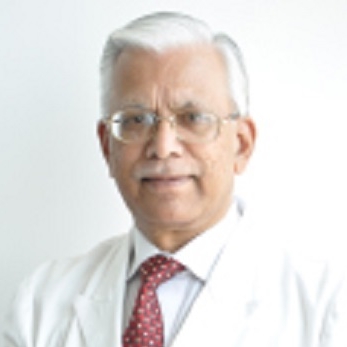
DR SUNIT CHANDRA SINGHI
Pediatrician
- Fees: INR 900
-
Friday 10:00 AM - 4:00 PM
(See all timing)Monday 10:00 AM - 4:00 PM,
Tuesday 10:00 AM - 4:00 PM,
Wednesday 10:00 AM - 4:00 PM,
Thursday 10:00 AM - 4:00 PM,
Friday 10:00 AM - 4:00 PM,
Saturday 10:00 AM - 1:00 PM 10% Off on OPD + Free Registration
Introduction
Dr. Sunit Singhi is one of the best doctor in Gurgaon. Dr. Sunit Singhi is a paediatrician of international repute and a global leader in pediatric intensive care. Dr. Sunit Singhi has successfully established India’s first Pediatric Intensive Care Unit in 1992. Dr. Sunit Singhi is a fellow of American College of Critical Care (FCCM) and of Indian Academy of Pediatrics (FIAP). Dr. Sunit Singhi has also been a visiting professor to Boston’s Children’s Hospital, USA & Astrid Lindgren Children’s Hospital, Sweden. Dr. Singhi was the Senior Professor and Head, Department of Pediatrics at Post graduate Institute of Medical Education and Research, Chandigarh. Earlier he developed India’s first DM course in Pediatric Critical Care. Dr. Sunit Singhi has also been the President of World Federation of Pediatric Intensive and Critical Care Societies (WFPICCS).
Hospital Associations
Medanta - The Medicity, Gurugram
Services/Interest
- Pediatrics
- Paediatric intensive care
Experience
Dr Sunit is one of the best Pediatric in Gurgaon and has an experience of 42 Years in the field.
Professional Memberships
Life-Time Achievement Award of Indian Academy of Pediatrics for Research, 2016, Award of Excellence in Resuscitation by PediSTARS, 2016, Plaque of Honor from National IAP-ALS group, 2015, Life-Time Achievement Award of Indian Society of Critical Care Medicine, 2014, Pride of Pediatric Intensive Care Chapter' Award of Indian Academy of Pediatrics, 2013, Dr. K L Wig Award for excellence in medical education for developing and conducting Critical Care Courses from National Academy of Medical Sciences, 2013, National Swasth Bharat Samman for excellence in medical services and contribution to Public Health Care System of India, 2011, Amrut Modi Unichem Award for Research in Child Health by Indian Council of Medical Research, 2010, 23rd Oration of Vivekanand Institute of Medical Sciences, 2009, Harishchandra Oration of Indian Academy of Pediatrics, Andhra Pradesh, 2009, Claris Oration Award of Indian Society of Critical Care Medicine, 2003, Gold Medal of National Neonatology Forum, 1993SS Manchanda Gold Medal of Indan Academy of Pediatrics, 1976, Plaque of Honor by Association of Intensive Care Medicine.
Education
Fellow in Critical Care(FCCM) , Fellow in Critical Care(FISCCM) , Fellow in Critical Care (FICCM) , Fellow in Medical Sciences (FAMS), Fellow in Child Health (FIAP), MD(Pediatrics), MBBS.
I Speak
English, Hindi.
Feedback For Dr Sunit Chandra Singhi
Write FeedbackMedanta The Medicity Gurugram Timing
Monday - Friday
10:00 AM - 4:00 PM
Saturday
10:00 AM - 1:00 PM
Who is a pediatrician?
A pediatrician is a medical physician who specializes in the care of children. They have undergone special education in the health and illnesses of babies, teens, and young adults, and the majority of pediatricians are certified after passing a comprehensive exam.
Pediatrician's job is to provide preventive health care for kids in good health and medical care for kids who are acutely or chronically ill. Pediatricians also provide parents with support and advice with issues such as growth and development, nutrition, safety and prevention, and emotional wellness to foster a lifetime of good health.
How often should the parents take their child to a pediatrician?
Your child should not only see the pediatrician for an illness as it is also important to schedule child-care exams regularly, beginning in infancy. These routine examinations provide the best opportunity for the physician to watch the progress of your child’s physical and mental growth and development; to detect problems through screening tests; to counsel and teach parents; to provide immunizations, and to get to know one another. So, these visits are strongly suggested as part of preventive pediatric care.
What is the age limit for pediatrics?
Pediatricians are the physicians who are specially trained to care for newborns to 21-year-olds, and some can keep their patients through college. Research indicates that there is not one correct age for kids to transition to the adult family doctor as it depends on the needs and desires of the patient.
Diseases treated by the pediatrician?
- A sore Throat
- Ear Pain
- Urinary Tract Infection
- Skin Infection
- Bronchitis
- Bronchiolitis
- Common Cold
- Bacterial Sinusitis
- A cough
Do pediatricians deliver babies?
Pediatricians do not deliver babies. But in the hospitals or birth centers, children's doctors are always notified about the delivery of a newborn baby. So, pediatricians or your baby's doctor are always standing by to take care of the baby.
What happens in your baby's first pediatrician's appointment?
A nurse will often handle the first part of the appointment by taking the baby to a scale to weigh and measure him. The nurse may also extend his limbs to measure height and width, and will also use a tape measure to determine the circumference of the head. There are a few main things that the physician will accomplish during the baby's initial visit. He will examine the baby, educate parents, and will ask and answer questions. As every pediatrician's approach differs, some pediatricians will examine and provide information at the same time. The doctor will look at the baby's eyes, nose, ears, skin, and limbs, and also test that she is responsive and has proper reflective actions. The physician will also look for signs of jaundice or hernias and will examine the umbilical cord for signs of infection and proper healing.